
Start here
What is Dai Novel? An AI story game you play in your own words.
Most stories ask you to watch. Dai Novel asks who you want to be, then lets you play one character while the world answers for everyone else.
Dai Novel is an interactive AI novel and story game. Someone builds a world: its history, its people, its rules, the trouble already brewing. You step in as one character and say what you do, in your own words. The next page is written and illustrated in response, and the world keeps track of what you did.
That is the short version. The longer one is about why it works, and what it is not.
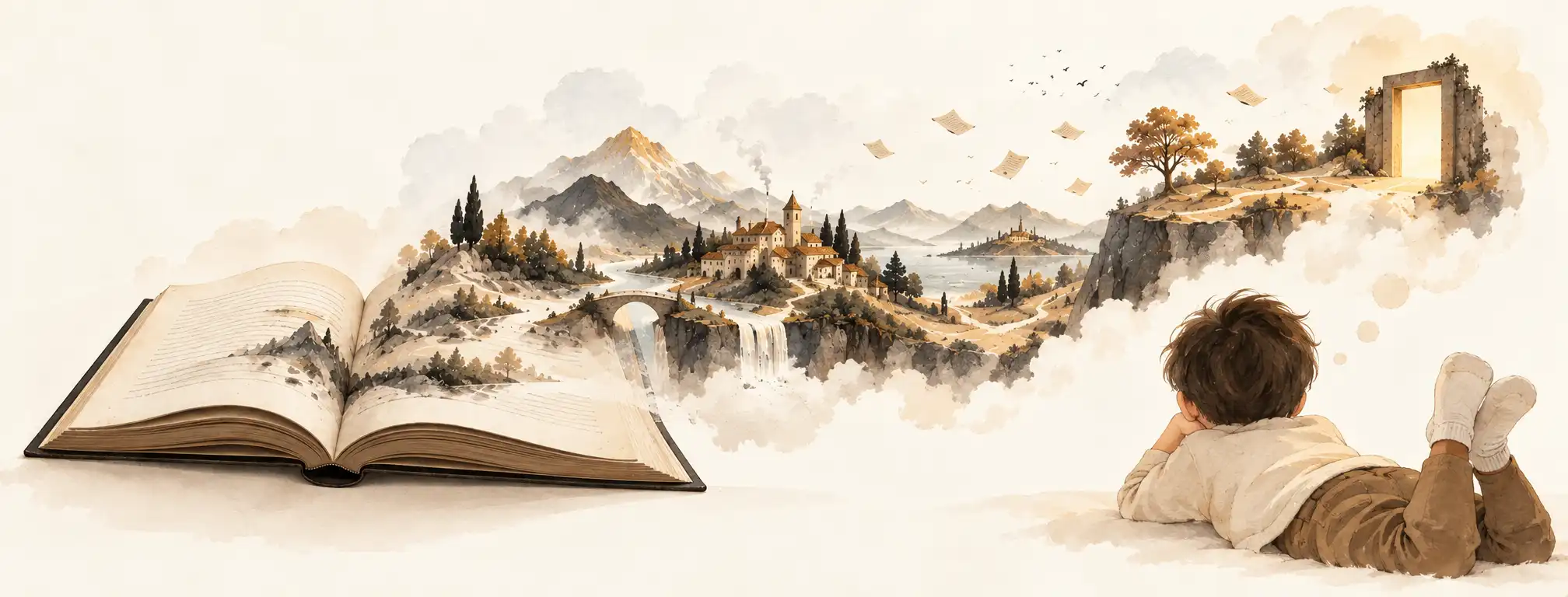
A world that exists before you arrive
Plenty of AI chat tools will invent a setting the moment you ask for one. That setting is gone by the next conversation, and it never had anyone in it who wanted anything before you showed up. That is why such worlds feel empty, however good the prose.
A Dai Novel world is authored first. History, rules, inhabitants, loyalties, places and unresolved pressure are already there when a player arrives. The gate sergeant has a ledger. The rival school has a grudge. The map has a road you haven’t taken yet.
We call that record the Codex: connected data that describes how the setting works, who lives there, what they want, where events can happen, and how the larger story may move. The editor, the illustrations and the play system all read from the same Codex, so the world you play is the world its creator built.
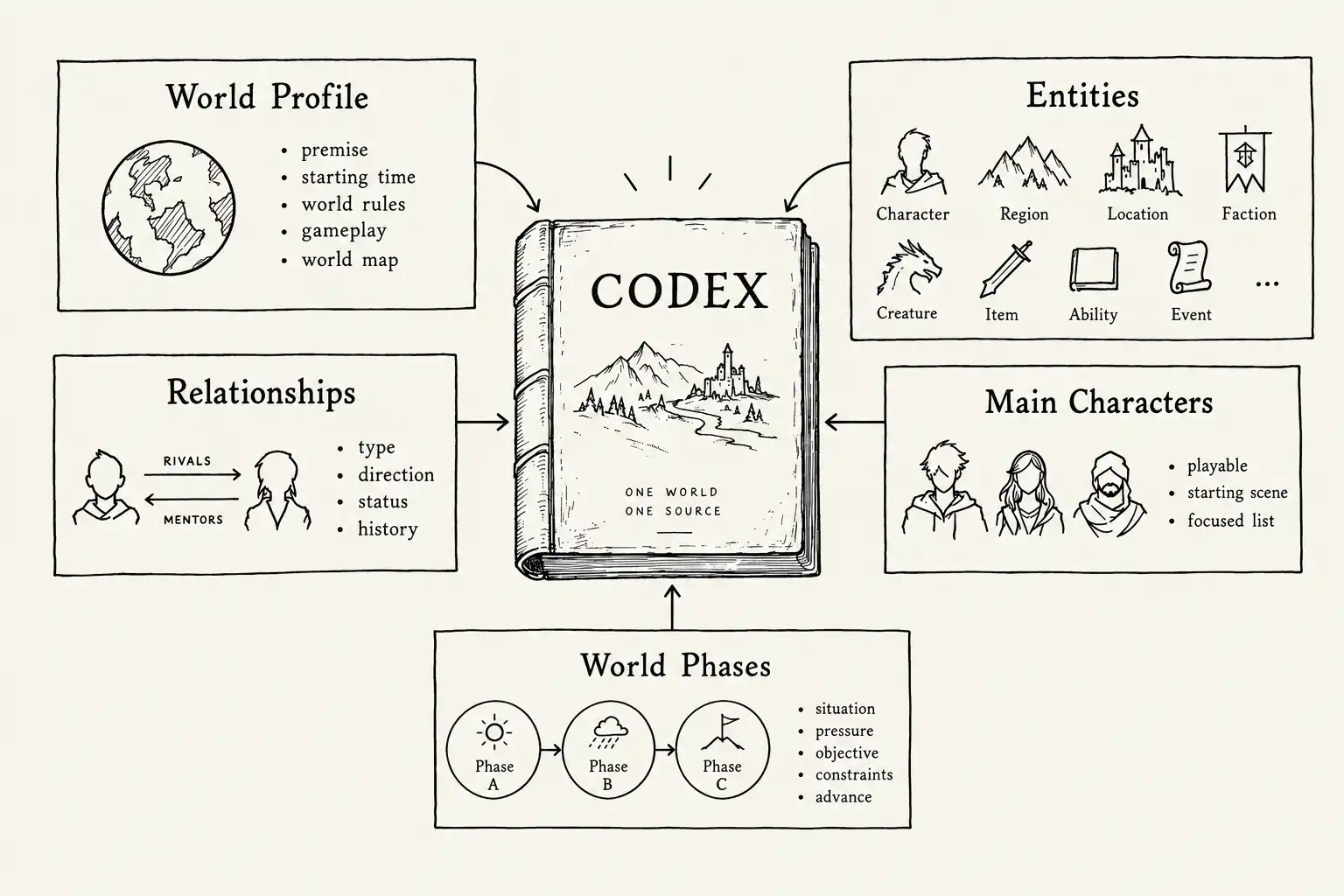
How an AI story game turn works
Play is simple on purpose. You pick who you enter as, read the opening scene, and act.
- Choose a main character. Each world offers one or more viewpoints a reader may enter.
- Read the starting scene. It drops you into an immediate situation.
- Act. Pick a suggested action or write your own: a deed, a line of dialogue, a thought.
- Read the next illustrated page. World time, the story map, character cards and your own state update with it.
The gate sergeant doesn’t look up from his ledger. “Name.”
I give him my brother’s.
He writes it down without a pause. Behind you, the bells of the capital begin to ring.
There is one rule worth knowing early. You decide what your character does, thinks and feels. If you try to decide what someone else does, or declare how things turn out, the story treats it as an attempt or a wish, not a fact. The world gets a say. That is what makes it a world.
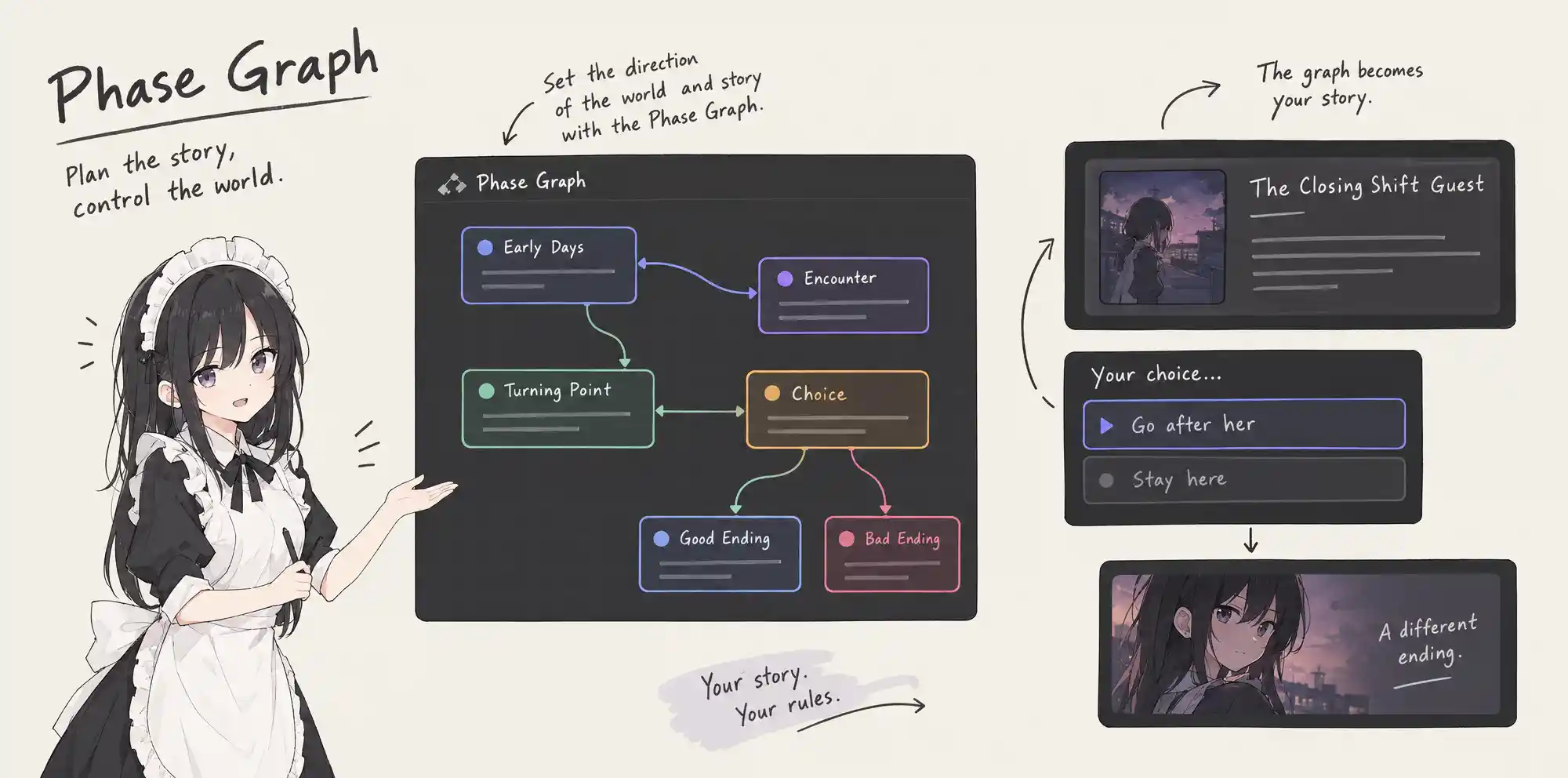
The creator sets the direction. The AI writes the moment.
Unbounded AI storytelling has a familiar failure, one as old as interactive fiction itself: the plot wanders, conflicts resolve too early, and three turns later nobody remembers the point. Dai Novel answers that with World Phases.
A phase is a story state, not a script: what is going on, what pressure is active, what the story is reaching for, and which phases can come next. Creators connect phases into a graph with branches and endings. During play, the story can stay in the current phase or move to one of its connected next phases. It cannot invent an unrelated one or skip ahead.
Inside a phase, scenes stay free to react to whatever you said. Across phases, the shape of the story stays authored.
Stories that remember what you did
Close the tab mid-scene and your story waits where you left it. When you come back, the promise you made, the debt you skipped and the secret you let slip can still come up.
Dai Novel uses selective long-term memory in three layers: working memory for recent events, episodic memory for the moments that turned out to matter, and world memory for the few truths the setting should keep treating as real. It is not a perfect transcript, and we don’t pretend it is. It is a way to give important events a better chance of echoing later. There is more on this in why AI stories forget, and how Dai Novel remembers.
Illustrated, page by page
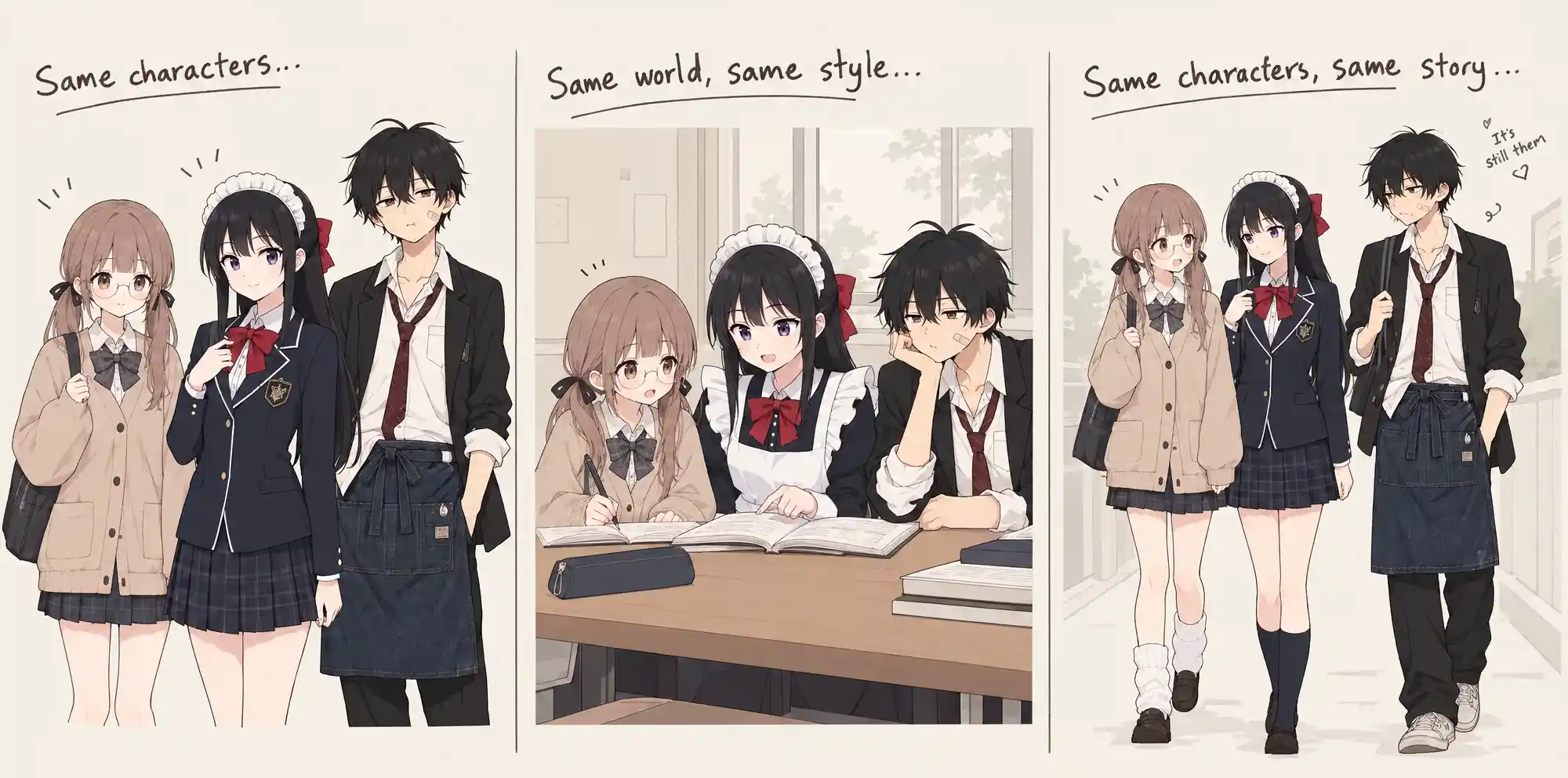
Each turn comes with a picture drawn from the same Codex: the world’s style, the scene’s prose, the characters’ existing artwork and the previous scene. Once a character has a portrait, later scenes can reuse it instead of inventing a new face. Generated art can still drift from turn to turn; keeping it consistent is ongoing work.
For people who build worlds
The same product is a world builder. The World Editor keeps premise, characters, factions, places, relationships, gameplay stats, maps and phases in structured fields instead of one giant prompt. An AI assistant, the World Helper, drafts changes you can inspect, apply or revert. When the world is ready, you publish it, keep editing, and release a newer version later.
If that sounds like your kind of evening, read how to build your first story world.
What Dai Novel is not
- Not a prompt box. The world is built before the first choice.
- Not an unrestricted roleplay chat. You play one character; the world answers for everyone else.
- Not a fixed branching story. Phases set the direction; the scenes are written live from what you actually said.
Where things stand
Playing is open: free to start, in your browser, nothing to install. Publishing is open too. Creator income is not yet: credits from eligible play are tracked today, but cash withdrawals aren’t available.
Where we think all of this is heading is its own essay: the future of the interactive novel.
Who will you be next?
Step into a world someone else built, or start one of your own.
Play a world free or create a world